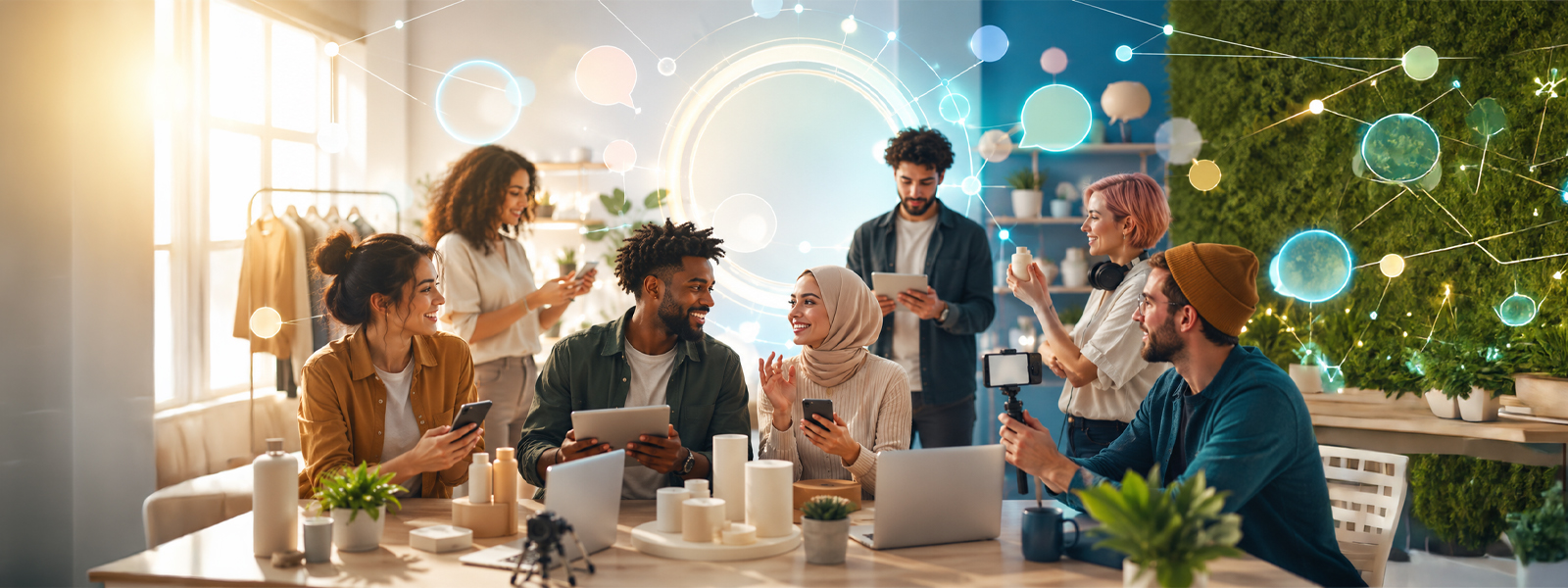
What if your customers weren't just buyers but passionate fans who feel like they belong somewhere? Wouldn't that change everything?
Your brand would turn into a movement than being just another marketplace. Even more lit would be the fact that it will sell highly without much efforts. However, what exactly is that secret-sauce type strategy for this?
You'll be surprised to know that it's simpler than you think. It's building a brand community. Interesting, right? Well, as per a recent Hubspot's survey, 86% of social media marketers now say that building an active online community is a high-priority part of their strategy.
Instead of directly selling products to their consumers, brands are building spaces where influencers not only lead conversations but also fuel engagement and turn casual shoppers into strong brand advocates.
Other than that, influencer marketing today is more than driving wide reach or chasing viral moments. It is the backbone of brand-led micro cultures. Wondering how? Find it all with the best practices inspired by top brands and real-world success stories from Nykaa, Renee Cosmetics and Myntra ahead!
Best practices to create a strong brand community
1. Dedicated community spaces: Instagram's broadcasting channel
Instagram's broadcast channels allow both creators and brands send one to several messages directly to their followers. You can consider everything from behind-the-scenes content to quick updates and real-time interactions in this.
Adam Mosseri, Head of Instagram, said, It's a paradigm shift explaining how people today prefer sharing in private spaces than posting in public often.
Apart from that, the broadcasting channels are not just a messaging tool but a private and opt-in community space. By enabling the users, both brands and influencers skip the algorithm, form direct relationships, and convert engagement into two-way conversations.
Why it works?
- It gives both influencers and brand teams a lead role in conversations.
- It supports genuine bonds through exclusive and unfiltered communication.
- It boosts overall engagement.
2. Experiences that bring people together: Nike's local running events
Nike creates a movement to sell their shoes. Their Nike Run Club (NRC) is more than just an app. It's a global running community where local meet-ups, virtual challenges and guided runs are all a part of the playbook.
Nikki Neuburger, Vice President of Nike's global running brand, said, Through the new Nike Run Club app, we're serving a running community that spans the globe with the most innovative and personalized experiences we've ever offered to runners.
She continued, We've thoughtfully considered and updated how we surround runners with everything and everyone they need to reach their full potential and have more fun with the sport, from coaching plans that adapt to meet their needs, to inspiration, motivation and a community of million to run with.
By organising in-person runs, charity events and location-based challenges, Nike turns customers into committed community members. Athletes, fitness creators, and micro-influencers lead many of these initiatives and bring a sense of authenticity as well as trust to every event.
Why it works?
- Real-life experiences amplify emotional connections.
- Community leaders like runners or coaches double up as brand ambassadors.
- User-generated content from these events levels up Nike's social media game.
3. Creator-led engagement loops: Sephora's Beauty Insider community
Sephora's Beauty Insider program is no doubt legendary already but what makes it highly powerful is the way its structured like a real community. Instead of creating a loyalty scheme, Sephora's goal is to nurture genuine and two-way conversations with its community across several channels.
Their team also runs the Sephora Squad, a dedicated group of influencers who produce tutorials, reviews and stories. These creators don't just promote their products but educate, experiment and become a part of the brand's identity.
Why it works?
- Influencers serve as educators, not just marketers.
- High quality user-generated content creates trust and demonstrates real product use.
- Engagement feels personal, not generic.
4. Reward participation and recognise community leaders: Starbucks Rewards + creator collaborations
Starbucks has long away understood how its customers are more than just coffee drinkers. They are a community. While the Starbucks Rewards program is external to influencer marketing, the brand also collaborates with creators for limited-time campaigns.
For example, seasonal cups and Instagram challenges.
By highlighting different creators in seasonal stories or influencer campaigns, Starbucks recognises the people who help them build its brand story. When a creator co-hosts a user-generated content challenge or is featured in a campaign, they feel valued and appreciated.
More than that, their audience also feel like a part of Starbuck's mission.
Why it works?
- It creates a feedback loop where loyal consumers become powerful storytellers.
- It makes the top creators stand as community leaders.
- It strengthens brand loyalty as the creators themselves are rewarded and seen.
Success stories: Brands that built powerful communities using influencers
1. Nykaa
Nykaa's approach to influencers is deeply rooted in community building. Through its Nykaa Affiliate Program, the brand works with more than 6000 influencers and key opinion leaders across beauty and lifestyle categories.
They also run Nykaa TV (YouTube) where their in-house creators create content that educates, entertains and sells. According to their 2023 report, Stream (shoppable content) got 10+ million visits and their live sessions received over 1.4 million visits.
Nykaa's annual report says, The Nykaa Affiliate Programme leverages influencers to create a community of trusted advisors.
2. Renee Cosmetics
Renee Cosmetics has been scaling faster day by day and a big contribution to that goes to influencer-led virility. While there's less available financial data publicly, their marketing playbook heavily relies on UGC challenges, reels and a Fab 5 products strategy that influencers love to showcase.
Creators post bold looks, unique unboxing, and tutorials. With time, Renee's community has grown into not just of buyers but it's co-creators. This loop of creator content to engagement to product feedback and then new launches helps them drive both brand awareness and loyalty.
3. Myntra
Myntra is turning its shoppers into creators in a big way. Their Ultimate Glam Clan, launched in September 2024, allows any shopper to become a content creator on Myntra's platform.
By early 2025, they had 1 million creators registered and recently reported 3.5 million shopper-creators. Even more impressively, creator-led content now contributes 10% of Myntra's total revenue, fuelled by their massive creator base.
They also launched the Style Squad which is a curated group of high-performing influencers (from the top 10% they had worked with) to co-create content and mentor newer creators.
Achint Setia, Head of Marketing and Social Commerce of Myntra, said, Influencer-led engagement is key to Myntra's marketing strategy, and we shall continue to make the right spending to enable this vision.
How to get started: Creating a brand community (action plan)
- Roadmap your influencer-community strategy: Begin with identifying creators who share your brand values. Move ahead with deciding what role they'll play like educators, event leaders or content creators etc.
- Choose your community platforms: Use Instagram broadcast channels for live updates. Consider applications or owned platforms such as forums or in-app spaces for deeper engagement.
- Launch with a clear purpose: Organise events or virtual meet-ups to bring your community together (just like how Nike did!). Support UGC content such as challenges, tutorials, influencer-led stories and more.
- Reward and recognise: Feature top contributors from creators to customers in your campaigns. Offer them incentives like mentorship sessions, commissions or exclusive access.
- Measure and iterate: Track engagement like open rates, replies, UGC volume and more. Use creator reviews and feedback to improve community experience. Enhance your strategy by adding more segments, launching more events and creating deeper level content based on what works.
Conclusion
Building a brand community isn't a side hustle but a well-thought strategy. In a world of fleeting ads and passive scrolling, brand communities rooted in influencer partnerships offer something real: belonging, engagement and a sense of shared identity.
Whether through a private IG channel, local runs, makeup tutorials or creator-led commerce, the brands that win aren't just selling products. They're creating tribes and those tribes become the most powerful drivers of growth.
If you're ready to go beyond likes and build a community that resonates, think of starting small. Pick one creator, one space, one event and build from there as a real community is never built in just a day.