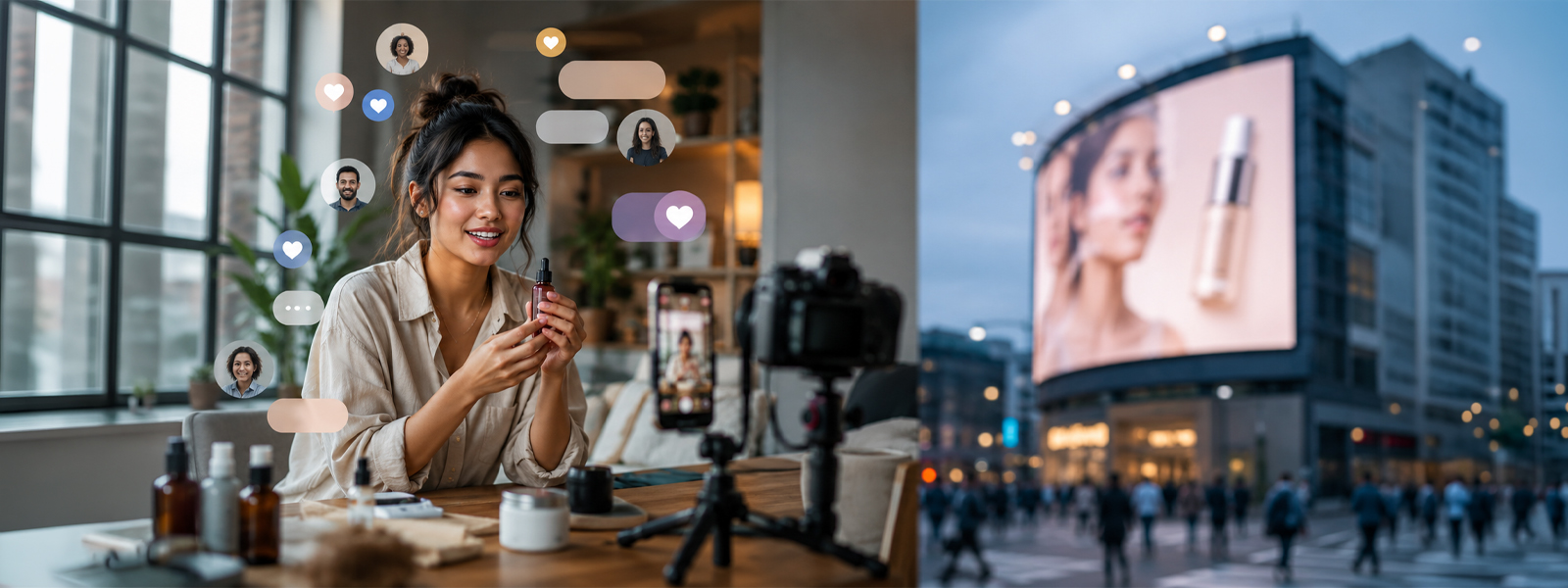
According to a recent Meltwater article, 61% of consumers now trust influencer stated recommendations, which means only 39% of them place the same faith in content produced directly by brands. This trust gap is not just a hurdle for marketing teams but a fundamental breakdown of how companies communicate with their audience.
Consumers trust influencers more than brands because influencer content feels more personal, relatable and rooted in real experience to them. This growing trust gap indicates that companies must move away from one-sided promotion and adopt more authentic as well as audience-centric communication to truly connect with their consumers.
This shift presents brands with two extremely different approaches. The first approach relies heavily on the sheer volume of a megaphone whereas the second approach thrives on the quiet power of a handshake. Breaking influencer marketing vs. traditional advertising reveals how trust is either built through repetitive messaging or through authentic communication. Let us understand the mechanics of ads vs. influencers to realize this better.
Ads vs. influencers
Traditional advertising often focuses on repetitive and polished brand messaging. However, influencer marketing is grounded in personal storytelling and lived experience. This difference in tone and delivery explains why people trust influencers more than conventional ads.
| Feature | Traditional advertising | Influencer marketing |
|---|---|---|
| Communication | One-way messaging | Two-way dialogue |
| User intent | Interruptive (ad-blocking) | Intentional (opt-in following) |
| Tone | Scripted | Relatable |
| Primary goal | Awareness via repetition | Conversion via credibility |
Trust in influencer marketing stems from perceived honesty and shared values. When a creator shares a product, it feels like a peer-to-peer recommendation instead of a cold, scripted pitch. This effectively bypasses the natural skepticism we feel towards traditional ads.
- Creative control vs. freedom: Traditional ads are polished and 100% brand-controlled. However, influencer content uses a creator's unique vernacular to make sure that the audience actually enjoys the message.
- Familiarity vs. repetition: While traditional ads focus on reach and frequency to break a message to their audience, influencers form trust through the exposure effect. By showing up in a follower's daily feed consistently, an influencer becomes a familiar friend which makes their recommendations feel safe and trial-worthy.
- Longevity vs. searchability: Paid ads disappear when the budget ends. However, influencer content remains searchable and evergreen. This long-term presence allows consumers to discover a recommendation naturally and leads them to rely on the word of an influencer more than an advertisement.
- Linear journey vs. ecosystems: Ads push a see-click-buy path whereas influencers weave products into a lifestyle ecosystem. This makes purchases feel like a natural evolution rather than a forced transaction.
For creators, this moves the expectation from simply promoting products to building genuine relationships where trust is earned through consistency, openness and authentic storytelling.
The role of authenticity and relatability
Authenticity is central to how modern people evaluate information online. Influencers build credibility by sharing their unfiltered opinions, everyday routines and real outcomes rather than idealized brand promises. Their content often includes imperfections, personal preferences and context. This builds honesty and transparency. Followers appreciate the fact that they are seeing a product in use and not just being sold to.
Relatability further strengthens this bond. Influencers typically reflect the lifestyles, challenges and aspirations of their followers. This is a key reason why influencer marketing works. People see someone like them navigating similar decisions. As a result, people trust an influencer more than an ad because the message is embedded in lived experience rather than isolated promotion.
Over time, this raises an important question: do influencers really influence, or do they simply validate choices that their followers are already considering? In many cases, authenticity acts as the bridge that turns consideration into confidence.
For brands, this means shifting from polished perfection to partnerships that allow creators to communicate honestly, imperfectly and in ways that genuinely mirror their audience's real lives.
Why trust develops before purchase intent
Trust forms gradually among people as they see an influencer's content, values and opinions consistently before considering any buying decision. The following factors determine why trust develops before purchase intent in influencer marketing in detail-
- Value-first content: An influencer's educational, entertaining or problem-solving content builds usefulness and trust for the followers before monetization appears.
- Social proof and validation: Number of likes, comments, shares and community feedback reinforce credibility and reduce uncertainty around influencer recommendations.
- Emotional connection: An influencer's followers feel understood as there is an openness between the individual and the audience. This makes the audience more receptive to the influencer's future recommendations.
- Low-pressure decision path: Unlike ads that rush conversion rates, influencers allow trust to develop naturally which makes purchase intent feel organic and well-timed.
- Mindset shaping before selling: Influencers focus on influencing awareness and perception first while easing their followers into decisions rather than pushing them to take immediate steps.
For marketers, the implication is to prioritize building long-term relationships and value creation over immediate conversions. It means to allow trust to mature before expecting purchase intent.
Community, consistency and long-term influence
Influencer trust is strengthened by the sense of community they cultivate around their content. Unlike traditional advertising, influencers encourage dialogue through comments, polls and direct interactions. This makes their followers feel heard and valued. The two-way engagement transforms their followers into active participants instead of passive viewers.
Consistency further reinforces credibility. When influencers show up regularly with aligned values, messaging and behaviour, they become a familiar presence in a follower's daily digital routine. Over time, this reliability signals stability and honesty, both of which are essential for trust. Followers begin to anticipate content and not avoid it, which deepens the entire relationship.
Long-term influence emerges from this combination of community and consistency. Instead of driving one-time conversion rates, influencers shape preferences, habits and brand perceptions over extended periods. Their recommendations feel informed and thoughtful because they are rooted in ongoing experience, making their influence durable rather than transactional.
Overall, the growing trust gap between brands and consumers highlights a shift in how people respond to marketing communication. Influencers earn trust through authenticity, relatability and consistent engagement while traditional advertising relies heavily on repetition and control.
By fostering community, delivering value-first content and allowing trust to develop before purchase intent, influencers create meaningful and long-term impact. This contrast shows that trust today is built through genuine connection and shared experience rather than one-sided promotional messaging.
Conclusion
The growing preference for influencer-led communication reflects a deeper shift in how trust is built in the digital age. Traditional advertising often speaks at consumers, while influencers speak with them. Influencers create space for dialogue, familiarity and emotional connection. This answers the question, why do people trust influencers more than ads? It is simply because trust is earned through consistency, shared values and lived experiences rather than repeated exposure alone.
Influencers integrate products into real contexts, allowing their followers to observe, evaluate and decide at their own pace. Over time, this approach answers an important question, do consumers trust influencers? Increasingly, yes, because the relationship feels human than transactional. People don't trust influencers because they sell, they trust them because they feel known.
For brands, the takeaway is clear. Meaningful influence is rooted in understanding and long-term trust will always outperform short-term persuasion.